
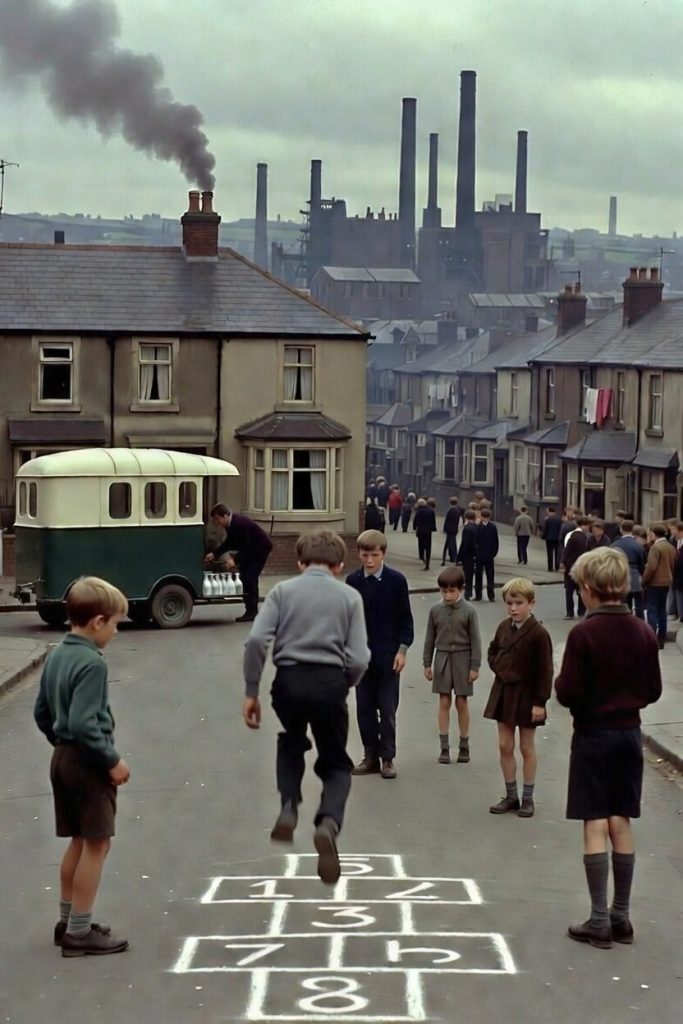
I reckon this piece is more an article for prosperity, one to get my kids and grandkids reading, as the questions or discussions on what life was like for me growing up often leads to fun family chats.
Then there’s the fact that we don’t get to mention so much of it – due to focusing on one aspect or element from those days gone by… Like how to claim the party line, before then dialing a number from a rotary phone… Or complaining that I was the remote for the 3 channels of TV that we had in Black and White… Not that we could see the TV if we had the weekly family bath, one after the other in the same water, and then sitting by the coal fire to dry our hair before bed, turning as each side got dry, so we could once again see the television.
So – before I continue to wander and remember ‘The old days before there were cars, and how we avoided the Dinosaurs’ – as asked of me by one of rte grandkids!!! – I’ll quickly explain how this memory lane trip came about – and how it did so, from just a random prompt.
I saw the prompt on Twitter (X), and decided to have a play. It was part of a series by someone called Jasmin, here is her thread:
https://x.com/AI_with_jasmin/status/2024098070732927259
I did try a few, but chose to use this first one as my blog article for my kids and grandkids to read, with only one simple addition to make it all closer to home.
Here’s my adapted/tweaked prompt:
My birth date is 29/11/1962. Using both local (living in the North of England), and global events, cultural shifts, and generational psychology, outline the most common childhood experiences for people born during this period. Focus on shared influences, formative environments, and how these shaped mindset, behaviour, and early identity.
And being on Twitter – I used A free version of Grok to generate this output:
People born in late 1962, like you (29 November), belong to the tail end of the Baby Boomer generation, often described as “Generation Jones” (roughly 1954–1965). This cohort experienced the optimistic tail of the post-war boom in early childhood but entered formative years amid the economic and social turbulence of the 1970s. In the North of England—industrial heartlands of Yorkshire, Lancashire, or the North East—this created a distinctive blend of working-class community resilience, regional pride, and pragmatic realism rather than the full “Swinging Sixties” idealism of older Boomers or the more detached cynicism of early Gen X.
Childhood (roughly 1963–1975) unfolded against a backdrop of post-WWII recovery turning into stagflation, with shared experiences that fostered independence, stoicism, and a strong sense of place.
Early Childhood and Home Environment (Ages 0–5, ~1962–1967)
Most grew up in terraced houses or council estates in mining/manufacturing towns (e.g., South Yorkshire coal districts, Lancashire mill areas, or Tyneside). Families were often nuclear: dad in manual work (bricklayer, miner, factory hand, or bus driver), mum at home managing the household. Homes had coal fires or basic central heating, outside toilets in older properties, and limited space—siblings sharing bedrooms was common.
Daily life involved simple routines: milk delivered in glass bottles, Monday wash days hanging clothes on lines, Friday fish-and-chips wrapped in newspaper. Pocket money bought penny sweets (gobstoppers, Black Jacks, flying saucers) or comics like Beano or Dandy. The harsh “Big Freeze” winter of 1962–63 (your first months) left memories of frozen milk bottles and icy streets, reinforcing a “tough it out” Northern attitude.
School Life (Ages 5–11+, ~1967–1975)
School started abruptly at age 5 with no nursery—many cried on the first day, separating from stay-at-home mums. Large classes (30+ pupils) in infants/juniors featured “talk and chalk” teaching, rote learning of times tables, poetry, and British history/geography/Commonwealth facts. Discipline was strict (ruler or cane for misbehaviour). Daily highlights included a third-pint of school milk (sometimes frozen and defrosted in the 1960s winters, or withdrawn for older kids by 1971), school dinners served family-style, and playtime games like marbles, conkers, or “kiss-catch.”
The 11+ exam loomed for many (streaming to grammar vs. secondary modern), though comprehensives expanded rapidly in the late 1960s–70s, blurring lines. Radio programmes like Music and Movement or Singing Together filled PE or music slots. Trips to farms, fire stations, or the Lake District (e.g., Grasmere for Swallows and Amazons filming) were memorable. Northern schools emphasised local pride—brass rubbing in churches, visits to collieries.
Play, Leisure, and Media
Unsupervised freedom defined this era: kids left after breakfast, played in streets/parks/bomb-site remnants until tea, returning scraped and muddy. Low traffic made roads playgrounds for football, hopscotch (chalked on pavement), skipping, or hoops. Winters brought snowball fights; summers, parks or fishing for sticklebacks. Toys included Action Man, Lego, Meccano, or Airfix kits; girls had Sindy dolls.
TV unified families (limited hours, often black-and-white until colour spread post-1967): Watch with Mother, Blue Peter, Doctor Who (hiding from Daleks), Crackerjack, and Saturday cinema “sixpenny rush” with cartoons. Music was huge—Beatles (Liverpool pride for Northern kids), then 1970s glam/punk edges. Bonfire Night (Guy Fawkes fireworks), Harvest Festival, and nativity plays were community staples. Bob-a-Job Week (Scouts) or youth clubs with records, Mars Bars, and Tizer added social layers.
Major Shared Events and Cultural Shifts
- 1966 World Cup win: Ecstatic for football-mad North—streets celebrated England’s victory.
- 1969 Moon landing: Watched in awe, fuelling space-age wonder.
- 1971 decimalisation: Confusing “new money” shift.
- 1973–74 oil crisis/three-day week/power cuts: Candles, cold homes, no TV—kids adapted with family games or early bedtimes; strikes and shortages built awareness of economic fragility.
- Watergate (1972–74): News filtered through, seeding institutional distrust.
- Cultural tide: Post-war austerity easing into consumerism, but North remained more grounded than London’s “Swinging Sixties.” Rise of youth culture (pop music, fashion) influenced older siblings; kids absorbed Merseybeat pride and emerging 1970s realism.
Global Cold War backdrop and Vietnam news added underlying tension, while local industrial life (buses to collieries, new housing estates bulldozing orchards) showed “progress” mixed with disruption.
Formative Influences on Mindset, Behaviour, and Early Identity
These experiences forged resilience and self-reliance: free-range play without helmets or constant supervision built physical toughness and problem-solving (“we just got on with it”). Strict schooling and large peer groups encouraged discipline, competition, and conformity, while community closeness (extended family bus trips, neighbourly streets) instilled loyalty and social skills.
Mindset: Optimism from 1960s prosperity and technological leaps tempered by 1970s malaise—leading to pragmatic idealism (Generation Jones hallmark) rather than hippie utopianism. Cynicism toward authority grew from scandals, strikes, and economic dips; Northern “grit” amplified a “keep calm, carry on” stoicism with wry humour.
Behaviour: Strong work ethic (mirroring parents’ manual labour), goal-oriented persistence, and resourcefulness (hand-me-downs, improvised play). Less validation-seeking; more internal drive. Outdoor focus promoted active, face-to-face socialising over screens.
Early identity: Deep Northern English pride—accents, football rivalries, industrial heritage (“ee bah gum” Yorkshire or Lancashire wit), contrasted with broader Britishness (maypole dances, Empire echoes fading). As late Boomers/Gen Jones, you felt the 1960s excitement as wide-eyed kids but missed direct participation, fostering a “we were just a bit too young” sense of being overshadowed yet adaptable. This cohort often developed moderate views, economic caution, and quiet determination.
Overall, your generation’s Northern UK childhood blended post-war hope, community warmth, and 1970s realism into a distinctive toughness: independent, no-nonsense, and community-rooted, with lasting nostalgia for simpler freedoms amid shared national and regional trials. Many today credit it for their adaptability in later economic shifts. These were remarkably common threads across working- and lower-middle-class families in the North.
Honestly – I reckon that is so close to my childhood, and wouldn’t require much editing to add more personal stories – so if I’m with the kids while reading this, we could chat all evening on the topic.
And yes, I decided to post it, as I recently saw a video based on a time period from my childhood, and when I showed my eldest daughter, she was amazed at some of the differences she wasn’t aware of.
So if you’ve read this far, I hope it entertained, or brought back memories, or better still – encouraged you to ask your older relatives about life when they were growing up.
Finally – feel free to let me know if you use the prompt, and create a post – I’m always interested in the differences too 🙂

P.S. If Prompting is still new to you, but you like using AI – Do check my sidebar for links to Free resources, Coaching that teaches AI, Or even my Club that delivers GPT’s on a monthly basis 🙂
